Inquiry on Religious Experience & Moral Identity

with support from the John Templeton Foundation

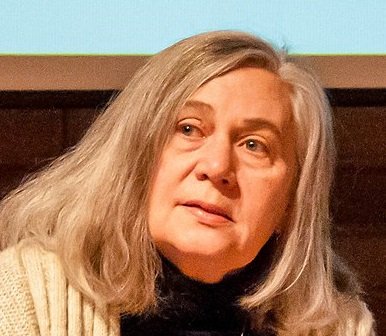
  Announcing the Resident Research Team

for 2013-2014

Read More

2012 – 2013

INQUIRY ON EVOLUTION & HUMAN NATURE

New lines of research in evolutionary biology, anthropology, and behavioral science are challenging conventional understandings of human nature and development, both in science and religion. These developments open the possibility of a comprehensive, multi-leveled account of human experience, reaching from genetic origins to the cultural formations that transmit ideas and experience to new generations. Both religion and science are concerned with the mechanisms and structures that make human continuity possible, and the values and behaviors that sustain it. 

› More about the 2012-2013 program

2013–2014

INQUIRY ON RELIGIOUS EXPERIENCE & MORAL IDENTITY

Interdisciplinary studies in psychology, neuroscience, and cultural and biological anthropology are contributing to a comprehensive account of human nature that has never been possible before. Reductive theories that require a choice between monocausal explanations—biological necessity or social construction, genetic inheritance or cultural formation, nature or nurture—are giving way to interdisciplinary accounts of complex human phenomena that draw on multiple explanatory frameworks.

Theological accounts of virtue and vice, spiritual experience, and personal transformation have a place in this comprehensive interdisciplinary inquiry, which proceeds not by simply comparing perspectives, methods, and hypotheses, but by asking how each way of knowing can use the results of the other to shape its own substantive questions and future inquiries. 

2014–2015

INQUIRY ON LAW & RELIGIOUS FREEDOM

From the beginnings of human society, religion has shaped lives, formed identities, and held communities together. In the modern world, religious diversity has made religious freedom both a demand of individual conscience and a requirement of social peace. The question for law and society has been, “How much religious freedom can we allow?” New inquiries in history, anthropology, psychology, and sociology suggest that religion remains essential to human identity and social cohesion, even in a modern, pluralistic society. Perhaps, then, the question is, “How much religious freedom do we require?” Answering that question invites critical thinking about how a law that preserves religious freedom can be reconciled with the requirements of many different religions.